About Us
Learn more about our mission, vision, and commitment to quality and sustainability.
Shepherd Minerals is a trusted global partner in the supply and trading of industrial minerals, metals, mining, and specialty chemical solutions. Our portfolio spans from raw minerals and metals to advanced catalysts and desulfurizers, delivering the essential resources that industries rely on to operate efficiently, sustainably, and responsibly. With a strong focus on quality testing, certification, and logistics support, we ensure our clients receive reliable products backed by technical expertise and global sourcing capabilities. Our solutions empower critical sectors including water treatment, desalination, oil & gas, petrochemicals, fertilizers, mining, metallurgy, and advanced filtration media. Driven by innovation and sustainability, Shepherd Minerals is committed to strengthening supply chains and fueling progress across global markets.
Our Mission
To deliver reliable industrial minerals, metals, catalysts, and specialty chemical solutions that empower industries worldwide to operate efficiently, sustainably, and responsibly. We are committed to providing quality, certified products, backed by technical expertise and global sourcing, while building long term partnerships that strengthen supply chains and fuel innovation.
Our Vision
To be recognized as a global leader in industrial minerals and specialty chemical solutions, driving progress across critical sectors such as water treatment, energy, petrochemicals, fertilizers, mining, metallurgy, and advanced filtration media. Our vision is to shape a future where innovation, sustainability, and responsible resource management create lasting value for industries and communities worldwide.
Our Commitment
With a strong focus on quality testing, certification, and logistics support, we ensure our clients receive reliable products backed by technical expertise and global sourcing capabilities.
Our Products
From the earth to industry - high-quality minerals, metals, and industrial raw materials.
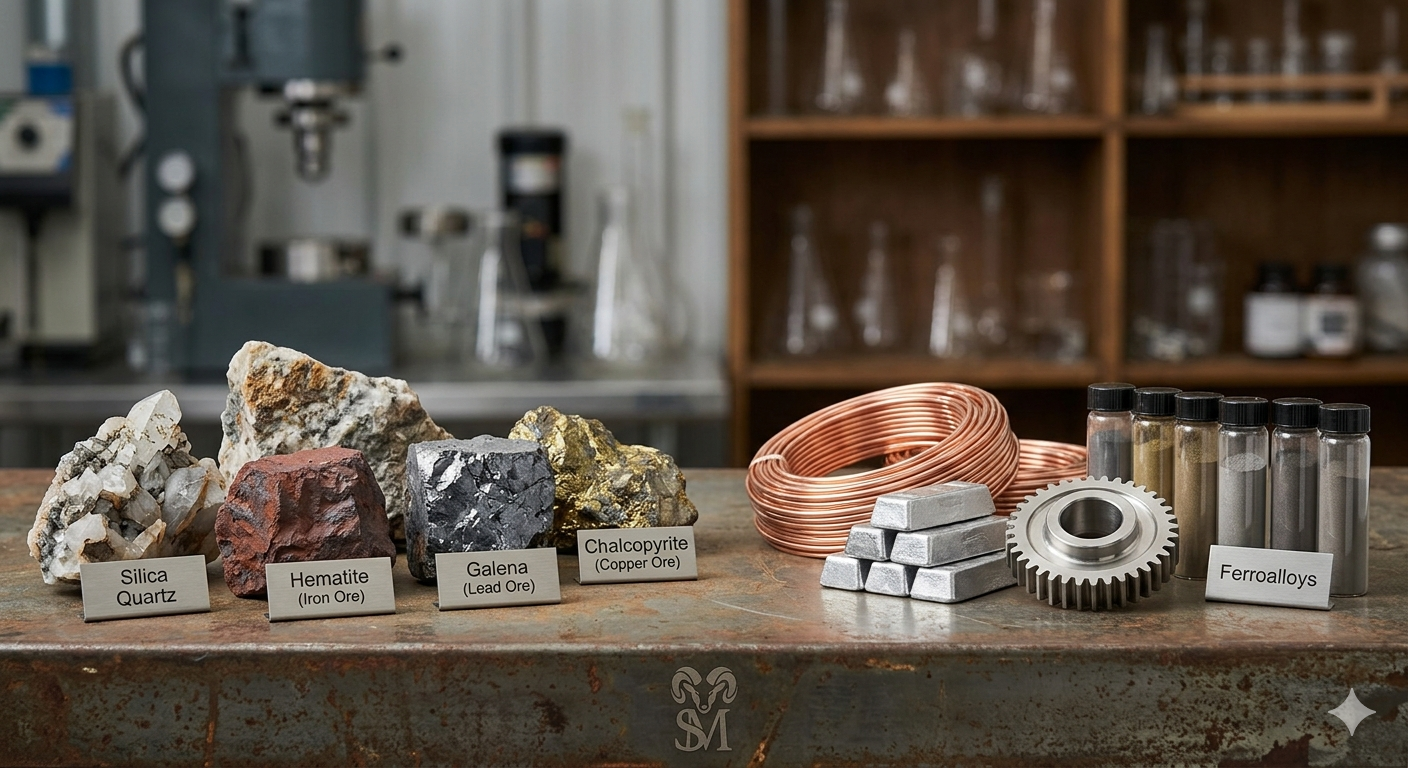
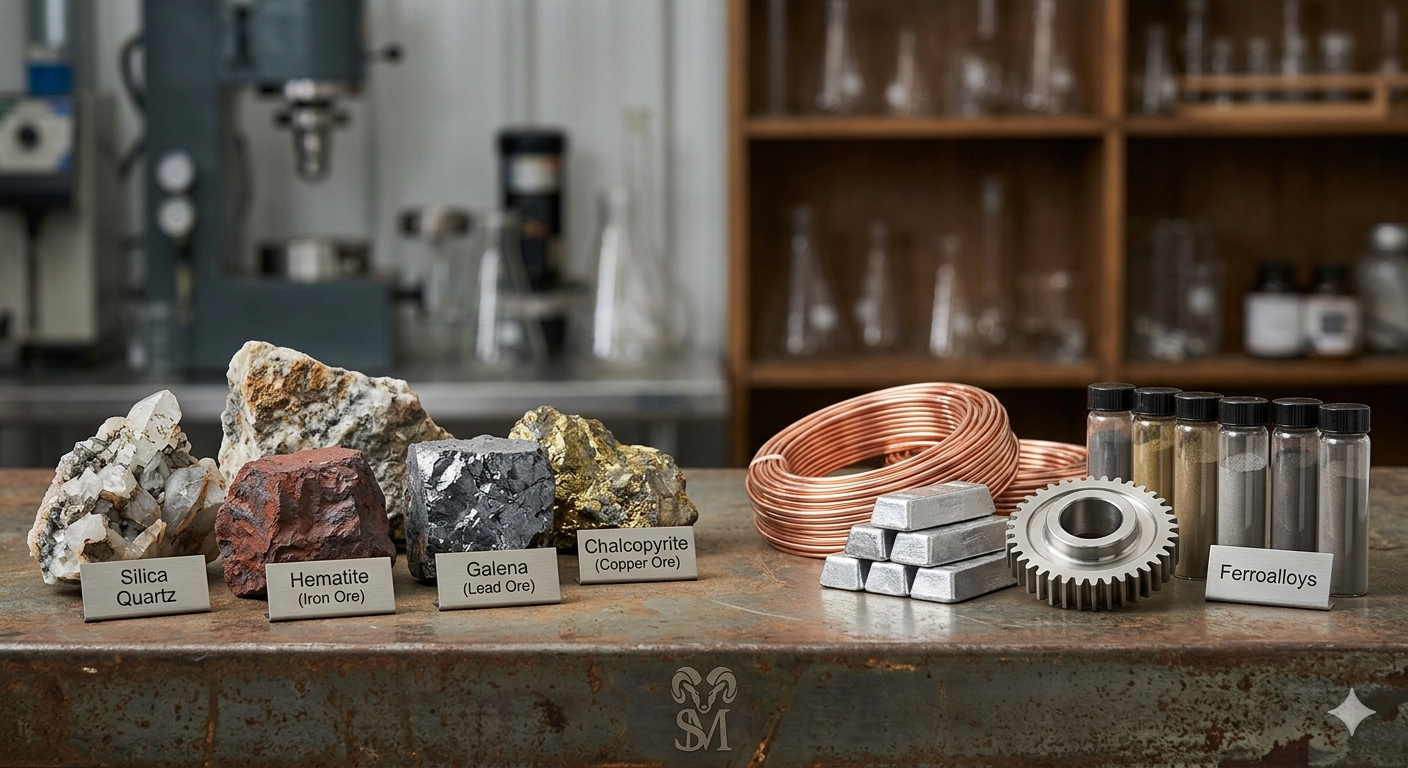
Silica (Quartz, Sand)
Silicon dioxide (SiO₂)
Silica sand and quartz are essential raw materials used in glass manufacturing, ceramic production, silicon wafers for electronics, and various industrial applications requiring high purity silica. Available in different grades for specific industrial needs.
Phosphate Rock
Apatite [Ca₅(PO₄)₃(F,Cl,OH)]
High-grade phosphate rock serves as the primary raw material for phosphoric acid production, which is essential for fertilizer manufacturing, animal feed supplements, and various industrial phosphate compounds used in detergents and water treatment applications.
Bauxite
Mixture of gibbsite (Al(OH)₃), boehmite (γ-AlO(OH)), diaspore (α-AlO(OH))
Bauxite is the primary ore for aluminum production, containing aluminum hydroxide minerals. It undergoes processing to extract alumina, which is then used in aluminum smelting. Also used in cement production and as a source of gallium and other rare elements.
Graphite
Carbon (C)
Graphite is a crystalline form of carbon used in refractories, lubricants, and electrodes. It serves as a key component in steelmaking electrodes, lubricants for high-temperature applications, and as a moderator in nuclear reactors. Available in various grades including flake, amorphous, and synthetic forms.
Talc
Magnesium silicate hydroxide [Mg₃Si₄O₁₀(OH)₂]
Talc is a soft mineral used extensively in cosmetics, ceramics, and as a lubricant. It provides excellent moisture absorption properties in cosmetic products, acts as a filler in ceramics and paints, and serves as a lubricant in various industrial applications including paper production and plastics manufacturing.
Limestone
Calcite (CaCO₃)
Limestone is primarily calcium carbonate used in cement production, construction materials, and agriculture. It serves as the main raw material for Portland cement manufacturing, provides calcium for soil amendment in agriculture, and is used in steel production as a flux to remove impurities from iron ore.
Gypsum
Calcium sulfate dihydrate (CaSO₄·2H₂O)
Gypsum is calcium sulfate used in cement production, plaster manufacturing, and agriculture. It acts as a retarder in cement to control setting time, is the main component of plaster and drywall, and serves as a soil amendment to improve soil structure and provide calcium and sulfur nutrients to plants.
Manganese Ore
Pyrolusite (MnO₂)
Manganese ore is essential for steel production where it acts as a deoxidizer and desulfurizer, improves mechanical properties of steel, and prevents brittleness. It is also used in battery manufacturing, particularly for alkaline and lithium-ion batteries, and serves as a raw material for various chemical applications.
Iron Ore
Hematite (Fe₂O₃), Magnetite (Fe₃O₄)
Iron ore is the primary source of iron for steel production worldwide. Hematite and magnetite are the main iron-bearing minerals processed in blast furnaces or direct reduction plants to produce pig iron, which is then converted into various grades of steel used in construction, automotive, and manufacturing industries.
Copper Ore
Chalcopyrite (CuFeS₂)
Copper ore is processed to extract copper metal used extensively in electrical wiring, plumbing, and electronics due to its excellent electrical conductivity. It forms various alloys like brass and bronze, and serves as a key component in renewable energy technologies including solar panels and wind turbines.
Lead Ore
Galena (PbS)
Lead ore is processed to produce lead metal used in battery manufacturing, particularly automotive batteries, and for radiation shielding in medical and nuclear facilities. It is also used in the production of ammunition, solder, and various chemical compounds, though its use is increasingly regulated due to environmental concerns.
Zinc Ore
Sphalerite (ZnS)
Zinc ore is processed to produce zinc metal used primarily for galvanization to protect steel from corrosion. It forms brass alloys with copper, serves as a component in batteries, and is used in die-casting for automotive and electronics applications. Zinc compounds are also important in rubber manufacturing and pharmaceuticals.
Chromium Ore
Chromite (FeCr₂O₄)
Chromium ore is processed to produce ferrochrome used in stainless steel manufacturing to provide corrosion resistance and strength. It is also used in refractories for high-temperature applications, chrome plating for decorative and protective coatings, and as a catalyst in chemical processes.
Nickel Ore
Pentlandite [(Fe,Ni)₉S₈]
Nickel ore is processed to produce nickel metal used in stainless steel production to enhance corrosion resistance and strength. It is a key component in rechargeable batteries, particularly lithium-ion batteries for electric vehicles, and serves as a catalyst in various chemical and petrochemical processes.
Tin Ore
Cassiterite (SnO₂)
Tin ore is processed to produce tin metal used for tin plating to prevent corrosion of steel in food packaging. It forms bronze alloys with copper, serves as a soldering material in electronics, and is used in specialized glass production and chemical applications requiring corrosion resistance.
Rare Earth Elements (REE)
Monazite (CePO₄), Bastnäsite [(Ce,La)(CO₃)F]
Rare earth elements are critical for modern electronics, powerful permanent magnets used in wind turbines and electric motors, optical applications, and catalysts. They enable technologies in smartphones, electric vehicles, renewable energy systems, and advanced military applications requiring high-performance materials.
Titanium Ore
Rutile (TiO₂), Ilmenite (FeTiO₃)
Titanium ore is processed to produce titanium dioxide used as white pigment in paints, plastics, and paper. It is also refined into titanium metal for aerospace alloys due to its strength-to-weight ratio, corrosion resistance, and high-temperature performance in aircraft and spacecraft applications.
Uranium Ore
Uraninite (UO₂)
Uranium ore is processed to produce uranium concentrates used as fuel in nuclear power plants for electricity generation. It undergoes enrichment and fuel fabrication processes to create nuclear fuel rods that undergo controlled fission to produce heat for steam turbine power generation in carbon-free energy production.
Lithium Ore
Spodumene [LiAl(SiO₃)₂]
Lithium ore is processed to extract lithium used primarily in rechargeable lithium-ion batteries for electric vehicles, smartphones, and energy storage systems. It is also used in ceramics and glass manufacturing to improve thermal shock resistance, and serves as a key component in lubricants and greases for high-temperature applications.
Ferrous Metals
Ferrous metals comprise iron, steel, and ferroalloys like ferrosilicon and calcium silicon. Essential for steelmaking, they enhance strength, durability, and metallurgical properties. Used in construction, automotive, and machinery industries, these materials provide the foundation for modern infrastructure and manufacturing processes.
Non Ferrous Metals
Non-ferrous metals such as aluminum, copper, zinc, and nickel provide superior conductivity, corrosion resistance, and lightweight characteristics. Aluminum enables aerospace and packaging applications, copper supports electrical and plumbing systems, zinc protects steel through galvanization, and nickel enhances stainless steel and battery technologies for modern industrial needs.
Precious Metals
Precious metals like gold, silver, platinum, and palladium are valued for their rarity, conductivity, and catalytic properties. Gold and silver are used in electronics and jewelry, while platinum and palladium serve as catalysts in automotive emissions control and chemical processes. These metals also play key roles in investment, medical devices, and high-tech applications.
Specialty Alloys
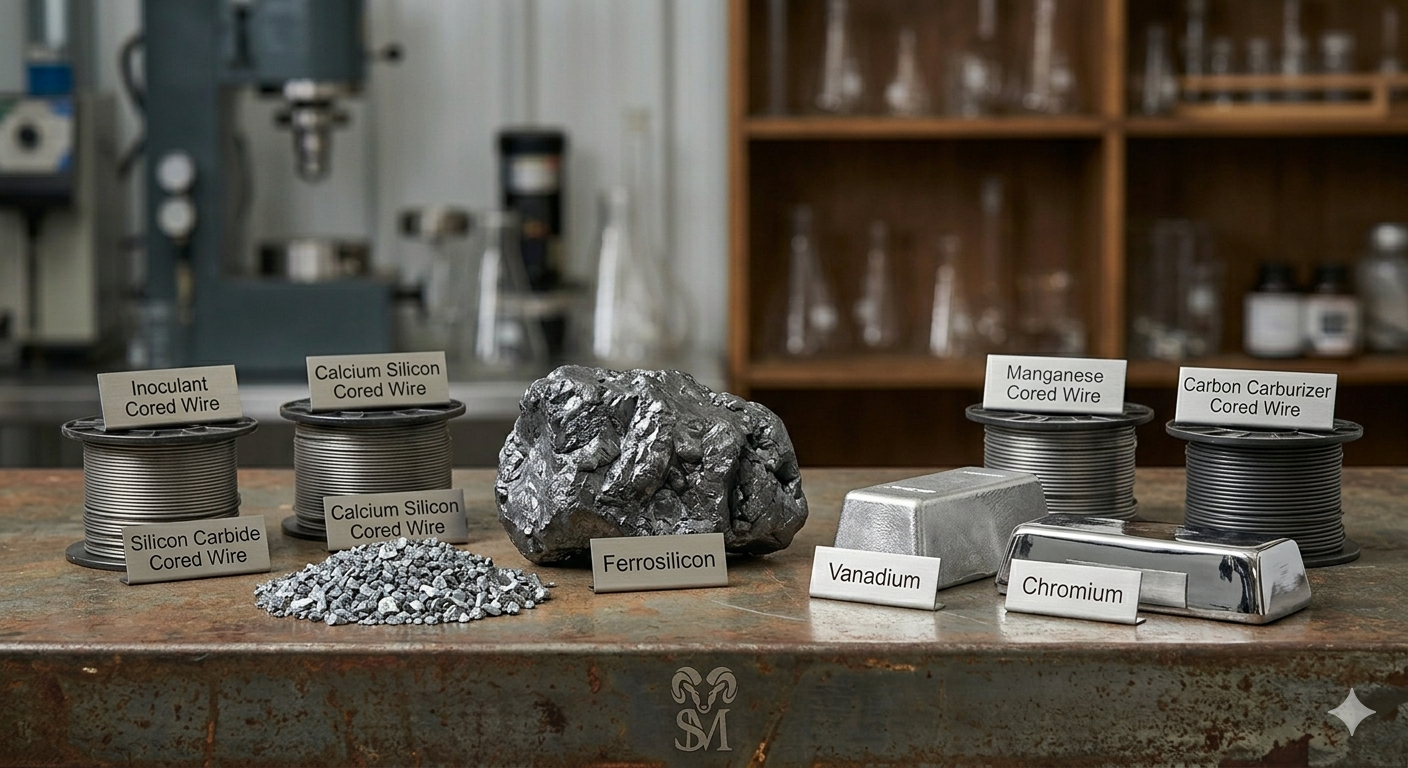
Specialty alloys containing vanadium, manganese, and chromium are engineered to enhance steel properties. Vanadium improves strength and toughness for high-performance applications, manganese aids hardenability and wear resistance, and chromium provides corrosion resistance in stainless steel. These alloying elements are crucial for aerospace, automotive, and industrial equipment manufacturing.
Ferroalloys
Ferroalloys including ferrosilicon, silicon carbide, inoculants, and cored wire are essential additives in steel and iron production. Ferrosilicon deoxidizes and strengthens steel, silicon carbide serves as an abrasive and refractory material, inoculants improve cast iron quality, and cored wire delivers precise alloying elements during steelmaking processes.
Carbon Additives
Carbon additives are crucial for steelmaking and foundry operations, providing carbon content to achieve desired steel properties. Graphite and carbon products enhance conductivity in electrodes, improve machinability in castings, and serve as carburizers to increase carbon levels in steel. These materials ensure consistent quality and performance in metallurgical processes.
Energy Resources
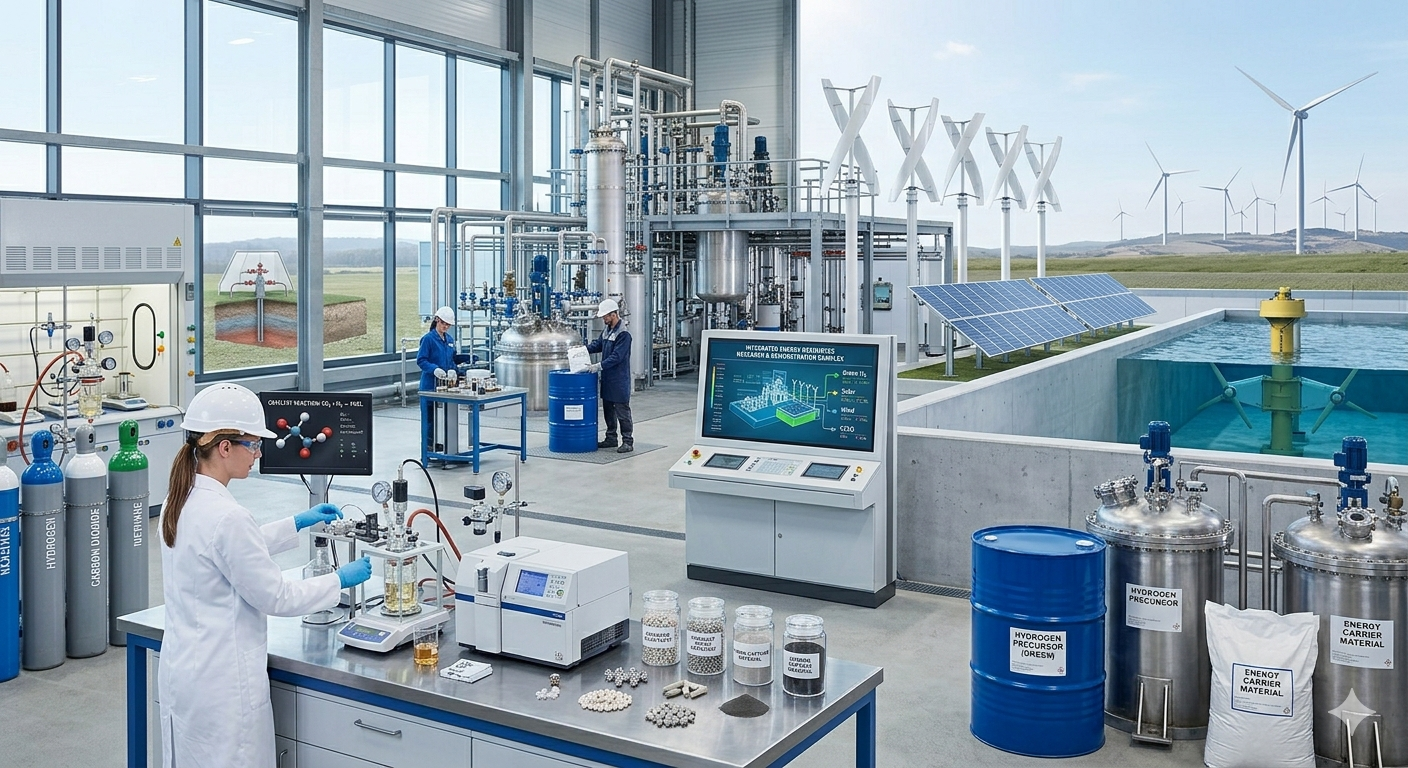
Energy resources such as coal, coke, and specialty fuels power industrial processes across sectors. Coal serves as a primary fuel for electricity generation and steel production, coke acts as a reducing agent in blast furnaces, and specialty fuels support high-temperature applications. These resources enable efficient energy production and industrial operations worldwide.
Chemical Inputs
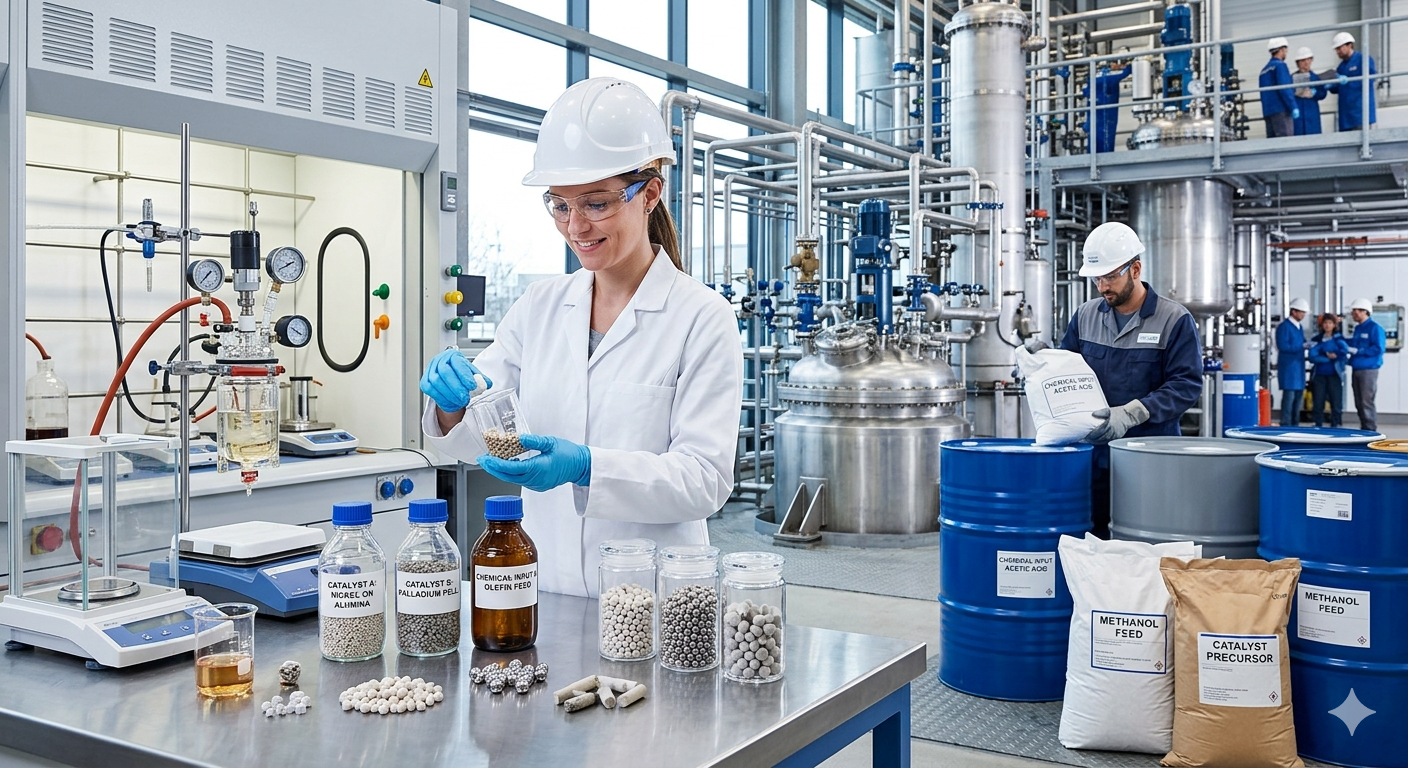
Chemical inputs including silica fume and industrial minerals are vital for metallurgical and chemical manufacturing. Silica fume enhances concrete strength and serves as a pozzolan, while minerals like alumina and specialty compounds support catalyst production, water treatment, and advanced material synthesis. These inputs ensure high-quality chemical and industrial processes.
Catalysts
Catalysts for ammonia synthesis, hydroprocessing, and reforming (including TK and RC series) accelerate chemical reactions in industrial processes. Ammonia synthesis catalysts enable fertilizer production, hydroprocessing catalysts refine petroleum products, and reforming catalysts convert hydrocarbons. These advanced materials optimize efficiency and reduce energy consumption in petrochemical operations.
Desulfurizers
Desulfurizers such as iron oxide compounds and dry sorbents remove sulfur compounds from gases and liquids. Iron oxide desulfurizers treat hot gases in metallurgical processes, dry sorbents capture SO₂ emissions, and fine purification materials ensure clean gas streams. These solutions support environmental compliance and improve air quality in industrial operations.
Our Services
Comprehensive solutions to support your industrial needs.
Technical Support
Comprehensive technical support including product expertise, detailed application guidance, and deep industry knowledge for mining, metallurgy, and materials processing. Our team provides consultation on material selection, process optimization, and troubleshooting.
Sustainable Partnerships
Building sustainable partnerships through responsible sourcing practices, environmental stewardship, and long-term collaboration. We prioritize ethical supply chains and promote environmentally conscious solutions.
Global Sourcing & Trading
Extensive global sourcing and trading network connecting clients with reliable suppliers worldwide. Our expertise spans multiple continents, ensuring access to premium quality materials and consistent supply chains.
Quality Assurance
Rigorous quality assurance programs including comprehensive testing, international certifications, and strict compliance with global standards. We guarantee product consistency and meet regulatory requirements.
Logistics Solutions
Integrated logistics solutions providing efficient shipping, strategic warehousing, and comprehensive supply chain management. From port operations to final delivery, we ensure timely transportation and proper storage.
Industries We Serve
Empowering critical sectors with essential resources and solutions.
Contact Us
Get in touch with our team to discuss your mineral and chemical needs.
Get In Touch
Address
Neuer Wall 43, 6.OG, 20354, Hamburg, Germany.